
5 Best Laboratory Notebook for Lab Research
Chemistry Lab Notebook is the best laboratory notebook for most buyers because its chemistry-focused format keeps experiment notes, formulas, and results together. It gives students and home lab users a clear place to record observations without starting with a blank page. That practical structure makes it a strong choice for routine coursework and repeat experiments.
This guide is for students, teachers, hobbyists, and anyone who needs paper records for lab work. Focus first on page size and binding, since a notebook must fit your workspace and stay open while you write. Paper quality and page layout also matter for ink control, diagrams, and long-term storage. The five picks below are ranked with clear reasons and honest drawbacks for each.
Quick Comparison
| # | Product | Best For | Price | |
|---|---|---|---|---|
| 1 | Chemistry Lab Notebook | Chemistry Students Tracking Experiments | $12.99 | View → |
| 2 | Yeplan Chemistry Lab Notebook | Organized Classroom Lab Notes | $15.99 | View → |
| 3 | BookFactory Lab Notebook | Professional Research Documentation | $24.99 | View → |
| 4 | Yeplan Laboratory Notebook with Carbon Copies | Duplicate Records for Lab Teams | $15.99 | View → |
| 5 | Yeplan Carbonless Lab Notebook | Clean Copying During Experiments | $18.99 | View → |
5 Best Laboratory Notebook Products
This ranked list moves from fifth place to the top pick, with each laboratory notebook compared for key features and value.
5. Yeplan Carbonless Lab Notebook
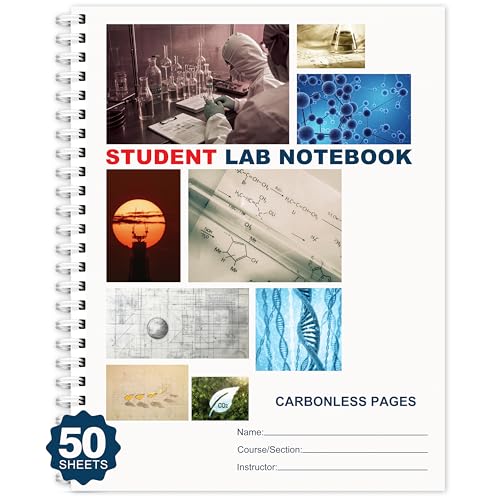
Best for: Chemistry students needing duplicate records
The Yeplan Carbonless Lab Notebook is an 8.5 x 11-inch record book for chemistry classes, research projects, and routine lab documentation. Each writing set creates a duplicate copy without carbon paper, giving students a backup record or a page to submit with a lab report. The notebook includes 50 sets of pages, so it suits a semester of moderate lab work but may not cover a year-long research project.
Its science grid paper supports measurements, charts, and chemical structure drawings. Built-in inch and centimeter rulers run along the page margins, while a periodic table provides a quick reference during lab work. The translucent cover helps shield pages from normal bench messes, although it should not be treated as waterproof protection. Wire-O binding allows the book to open flat and fold back for easier use beside lab equipment. At $18.99, the duplicate-page format may justify the price for students who regularly need backup documentation.
Pros
- Carbonless page sets create a duplicate record while you write.
- Grid paper, margin rulers, and a periodic table support lab calculations and diagrams.
- Wire-O binding folds back and lies flat on a lab bench.
Cons
- The notebook contains only 50 page sets, which may be limiting for extensive research.
- Duplicate pages increase bulk and may make the notebook less convenient for compact storage.
4. Yeplan Laboratory Notebook with Carbon Copies
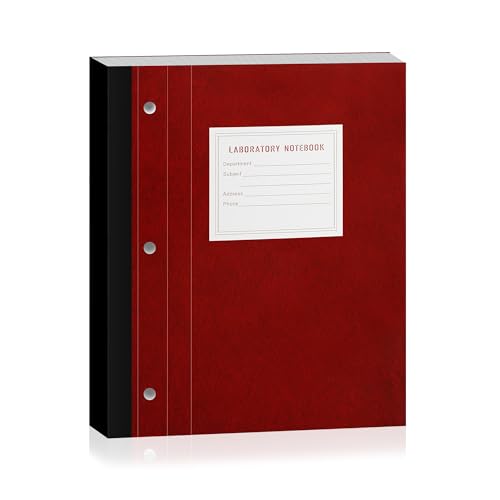
Best for: chemistry students keeping paper lab records
The Yeplan Laboratory Notebook is a hardcover paper record book for experiments, observations, and research notes. It measures 11 by 9.25 inches and contains 100 page sets with quadrille ruling. Each set includes a carbon-copy format, so you can retain a duplicate while submitting or sharing the original. Numbered pages also make it easier to track experiments and find older entries.
Its strongest feature is the combination of copies and perforated pages. You can remove a completed record cleanly without taking apart the notebook, which suits classroom reports, shared findings, or filed documentation. The hardcover is intended for frequent handling, spills, and storage over longer projects, though actual durability will depend on use. At $15.99, it offers a practical paper system for chemistry, biology, engineering, or general research work. The grid layout also supports tables, diagrams, measurements, and written notes.
Pros
- Carbon-copy pages create a duplicate record for filing or sharing.
- Numbered, quadrille-ruled pages help organize measurements and diagrams.
- Perforated sheets detach cleanly for reports or documentation.
Cons
- A carbon-copy notebook may add bulk for users who only need one working copy.
- The 11-by-9.25-inch size takes more desk and storage space than a standard notebook.
3. BookFactory Lab Notebook
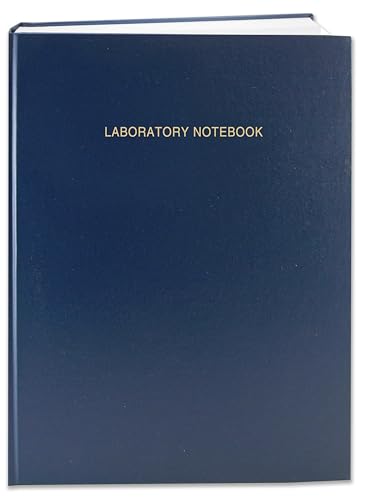
Best for: Researchers needing traceable lab records
The BookFactory Lab Notebook is a blue, hardbound record book for structured laboratory notes. It measures 8 7/8 by 11 1/4 inches and contains 96 pages with a 0.25-inch, or 6 mm, grid. The cover uses imitation leather and carries a stamped laboratory notebook label. At $24.99, it fits labs, classrooms, and research work that require a dedicated paper record.
Several details make this notebook more practical than a basic composition book. Its section-sewn binding lets the pages lie flat, which helps with writing and scanning. The 60 lb acid-free paper is archival quality and tamper-evident, supporting long-term record storage. A User Data page, Documentation Guidelines page, and Table of Contents provide a useful starting structure. The notebook is made in Ohio by a veteran-owned business. Still, the compact page count may limit projects with extensive daily entries.
Pros
- Section-sewn binding keeps pages open and flat.
- Acid-free, 60 lb paper supports archival storage.
- Built-in planning pages help organize records.
Cons
- Ninety-six pages may fill quickly in active labs.
- The fixed 0.25-inch grid can feel restrictive for long prose or large diagrams.
2. Yeplan Chemistry Lab Notebook

Best for: Students tracking chemistry experiments
The Yeplan Lab Notebook Chemistry uses a hardcover, PU leather-bound design for lab notes, calculations, and research records. Its 0.25-inch grid gives you smaller guide squares than many standard graph notebooks, which helps with charts, formulas, diagrams, and neatly aligned data. Numbered pages also make it easier to reference observations later.
The paper is described as thick enough for writing on both sides with less concern about ink bleeding through. It supports pencils and ballpoint pens, although the listing does not provide a paper weight or confirm performance with markers, gel pens, or fountain pens. At $15.99, this notebook offers a structured format for classroom work, lab documentation, and personal research logs. The firm cover should handle regular desk use better than a thin paper notebook, but the product details do not state the total page count or binding capacity.
Pros
- The 0.25-inch grid supports precise calculations, sketches, tables, and chemistry diagrams.
- Numbered pages help organize experiment records and locate older notes quickly.
- PU leather hardcover construction provides more protection than a softcover notebook.
Cons
- The listing does not state the page count, so storage capacity is unclear before purchase.
- A fine grid can feel busy for long paragraphs or broad handwritten notes.
1. Chemistry Lab Notebook

Best for: Students logging lab experiments
At $12.99, this is a standard 8.5 x 11-inch chemistry lab notebook for experiment records, calculations, sketches, and observations. It uses a perfect-bound format with a flexible cover and 105 pages. The large sheet size gives you more writing room than a pocket notebook, while the bound design keeps the pages together during regular class or lab work. It fits backpacks and lab bags, although its full letter-size footprint takes more room than smaller notebooks.
Each page uses a blank 5 x 5 grid, or five squares per inch. That layout suits graphs, reaction diagrams, tables, measurements, and handwritten notes without forcing a preprinted template. The paper is described as thick and intended to resist ink bleed-through, which can help keep both sides readable. Still, paper performance can vary with wet inks and markers. The cover is made for daily use, but perfect binding may not lie fully flat when open. This is a focused, no-frills option for students and researchers who want one consistent grid format.
Pros
- The 8.5 x 11-inch pages provide room for detailed lab notes and diagrams.
- The 5 x 5 grid supports graphs, calculations, tables, and reaction sketches.
- The flexible cover and perfect binding suit regular classroom or laboratory use.
Cons
- Perfect binding may make the notebook difficult to keep flat while writing.
- The fixed grid layout may not suit users who prefer lined, blank, or sectioned pages.
Buying Guide
The most important factor is record integrity. A notebook with numbered, permanently bound pages helps preserve a clear, tamper-resistant history of experiments, corrections, and signatures.
- Page count and layout: Choose 100–200 numbered pages with a contents section. Ruled lines or a 5 mm grid support measurements, tables, and diagrams. A4 or 8.5 × 11 inch pages leave room for pasted printouts.
- Paper quality: Look for acid-free paper rated at least 90 g/m², preferably 100–120 g/m². It should resist ink bleed from gel pens, permanent markers, and fountain pens.
- Binding and cover: Select sewn binding or strong adhesive binding that opens flat. A hard cover protects records in crowded lab drawers and during transport.
- Traceability features: Prioritize printed page numbers, date and experiment fields, and space for signatures. A duplicate-page design can provide a removable copy for regulated work.
- Lab conditions: Choose a coated or water-resistant cover if spills are common. For freezer or cold-room use, confirm the paper and adhesive remain usable below 0°F or −18°C.
If you cannot have everything, prioritize record integrity through numbered pages, permanent binding, and clear sign-off fields.
Frequently Asked Questions
How do I choose the best laboratory notebook for daily research?
Choose the best laboratory notebook by matching its paper, binding, page layout, and compliance needs to your work. For routine experiments, a sewn notebook with numbered, acid-free pages and a table of contents offers a reliable record. A 100-page format suits many projects, while duplicate pages help preserve copies for regulated or collaborative work.
What features should the best laboratory notebook have?
The best laboratory notebook should have numbered pages, durable binding, enough writing space, and room for dates, signatures, and corrections. Look for acid-free paper, a contents page, and a cover that resists common lab spills. Page grids of 5 millimeters work well for diagrams, measurements, and small tables.
Can I use a regular notebook instead of a laboratory notebook?
You can use a regular notebook for informal notes, but it may not meet laboratory recordkeeping or audit requirements. Many standard notebooks lack numbered pages, tamper-resistant binding, and dedicated spaces for dates or witness signatures. For example, a class exercise may fit a basic 80-page notebook, while documented research usually needs stronger controls.
Are waterproof laboratory notebooks worth buying?
Waterproof laboratory notebooks are worth buying when pages may face water or frequent handling. Their synthetic paper often accepts ballpoint ink but can reject some pencils, so check the writing-tool guidance before purchase. A 100-page waterproof book costs more than paper, but it can protect records during field sampling or wash-down work.
Conclusion
Chemistry Lab Notebook remains the top recommendation for chemistry students, lab classes, and home experimenters who need a clear place for procedures, observations, calculations, and results. If your priority is duplicate records, choose a carbonless laboratory notebook instead, since its copy pages let you preserve an original entry for your files while submitting the duplicate to an instructor, supervisor, or project partner. Before buying, double-check the notebook’s size, page dimensions, binding, paper compatibility with your pen or required lab format, quantity in the pack, and current price, since listings can change and similar titles may describe different versions. A quick comparison with your course or workplace requirements can prevent an unsuitable purchase.