
6 Best Index Cards for Fountain Pens on a Budget
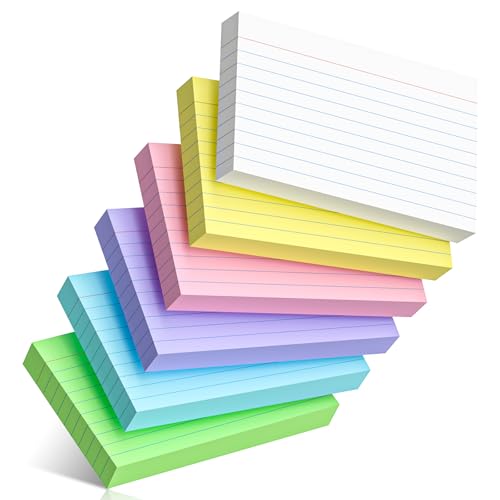
For most buyers, the 300 Count 3 x 5-Inch Ruled Index Cards are the best index cards for fountain pens because their standard size and 300-card pack provide a practical supply for everyday writing. These ruled cards suit students, list makers, study groups, and anyone who wants a large stack for notes, quotes, or flashcards.
This guide is for fountain-pen users who need compact cards without ignoring paper performance. The key factors are card size and surface quality. A 3 x 5-inch card limits long entries, while absorbent paper can cause feathering, show-through, or slow drying. I also consider ruling, pack count, and storage needs when they affect practical use. The 6 picks below are ranked with clear reasons and honest drawbacks for each, so you can match a card to your nib, ink, and note-taking habits.
Quick Comparison
| # | Product | Best For | Price | |
|---|---|---|---|---|
| 1 | 300 Count 3 x 5-Inch Ruled Index Cards | Budget-Conscious Study Note Takers | $6.99 | View → |
| 2 | Original Bullet Cards Dot Grid Index Cards | Bullet Journal Planning Fans | $22.99 | View → |
| 3 | Oxford 63500 Ruled Index Cards | Organized Classroom Study Sessions | $3.89 | View → |
| 4 | Notsu Dotted Index Cards | Compact Sketching And Notes | $12.99 | View → |
| 5 | 5×8 Colored Index Cards, 120 Count | Color-Coded Research Projects | $7.99 | View → |
| 6 | Notsu Dot Grid Index Cards | Structured Brainstorming And Planning | $16.14 | View → |
6 best index cards for fountain pens, ranked
This list is ordered from sixth place down to the top pick, based on paper quality, ink performance, size, and value.
6. Notsu Dot Grid Index Cards

Best for: Portable planners and sketch notes
The Notsu Dot Grid Index Cards are 5 by 7-inch cards for notes, diagrams, study prompts, and short plans. The pack includes 40 cards and costs $16.14, or about 40 cents per card. Their 350gsm paper is much heavier than standard office index-card stock. That gives each card more body for writing and should help it hold up in a notebook pocket, desk drawer, or project box.
A center score line lets each card fold into two 3.5 by 7-inch sections. This makes a full card easier to carry while leaving room for separate prompts, lists, or thumbnail sketches. The light dot grid adds alignment without the visual weight of ruled lines. Rounded corners help reduce snagging and bent tips, though they cannot prevent damage when cards are packed tightly. The main appeal is the mix of structure and flexibility. These cards offer more room than sticky notes without the fixed format of a bound notebook.
Pros
- 350gsm stock provides a firm surface for writing, diagrams, and light sketching.
- The scored fold reduces the card to a portable 3.5 by 7-inch format.
- Dot spacing supports neat notes while keeping the page visually simple.
Cons
- At about 40 cents per card, the $16.14 price is high for a 40-card pack.
- Folding creates a permanent crease and reduces each writing side to half the original width.
5. 5×8 Colored Index Cards, 120 Count

Best for: Students sorting notes by subject
These 5 x 8-inch index cards offer more writing space than standard 3 x 5 cards. The pack includes 120 cards, split across six colors with 20 cards per color. At $7.99, it provides a practical supply for studying, recipes, shopping lists, cue cards, and project notes. The larger format also leaves room for diagrams or longer outlines.
Each card uses 160 gsm acid-free cardstock, which should feel firmer than basic paper and help limit ink bleed and curling. The front has horizontal lines spaced 7 mm apart, while the back remains blank. That setup supports neat notes on one side and sketches, formulas, or visual layouts on the other. The color groups can also separate subjects or tasks without extra labels. Compatibility with highlighters, fountain pens, glue pens, and markers adds flexibility, though results can vary by ink type and pressure.
Pros
- Six colors make subject or task sorting simple.
- 5 x 8-inch cards provide space for detailed notes.
- 160 gsm acid-free paper suits many pens and markers.
Cons
- Only one side has ruled lines, so the reverse may not suit users who want fully lined cards.
- Six colors may not provide enough category choices for large projects or extensive study systems.
4. Notsu Dotted Index Cards

Best for: Bullet-journal study notes
The Notsu Dotted Index Cards measure 3 by 5 inches and come in a 50-card pack for $12.99. Each card uses 350 gsm card stock, giving it a thicker feel than standard paper index cards. Both sides have a dotted grid, so one card can hold notes, diagrams, study prompts, or a short brainstorming session. The compact size fits easily into a desk drawer, backpack, or recipe box.
The rounded corners give the cards a cleaner look and may help prevent sharp edges from catching on other papers. The dot layout offers more structure than blank cards without forcing every note into ruled lines. That makes these cards useful for flash cards, quick outlines, sketches, and bullet journaling. At about 26 cents per card, the pack costs more than basic index cards, but the heavier stock and two-sided design provide more usable writing space. The main trade-off is the fixed 3-by-5-inch format, which can feel cramped for detailed notes or large diagrams.
Pros
- 350 gsm card stock feels sturdy for frequent handling.
- Double-sided dotted grids provide writing space on both faces.
- Rounded corners reduce sharp edges and add a finished appearance.
Cons
- The 3-by-5-inch size limits room for long notes or complex diagrams.
- At $12.99 for 50 cards, they cost more than standard index cards.
3. Oxford 63500 Ruled Index Cards

Best for: Students making study flashcards
Oxford Heavyweight Ruled Index Cards come in the familiar 3″ x 5″ format, with 100 white cards in each pack. That size fits most index-card boxes and gives you enough room for definitions, formulas, reminders, or short presentation notes. The cards are ruled on one side, which helps keep handwriting more consistent without forcing lines onto both sides.
The heavier paper is the main reason to choose this pack over basic index cards. It is made to handle chunky markers, gel pens, ink, and highlighters with less worry about the sheet feeling flimsy. Still, paper performance can vary by ink and how much you apply, so these are not a replacement for specialty bleed-proof cards. At $3.89 per 100 cards, the pack suits regular studying, office reference notes, and quick preparation. The cards are made in the USA, which may matter to buyers who prefer domestic manufacturing.
Pros
- Heavyweight paper supports markers, gel pens, inks, and highlighters.
- Standard 3″ x 5″ dimensions work well for studying and portable notes.
- A 100-card pack provides a useful supply at $3.89.
Cons
- Only one side is ruled, so the blank reverse may not suit two-sided note takers.
- White cards can show ink bleed, smudges, or heavy marker coverage more clearly than darker stock.
2. Original Bullet Cards Dot Grid Index Cards

Best for: Portable bullet journaling and study notes
The Original Bullet Cards are 3 x 5-inch index cards with a printed dot grid on both sides. The 200-card pack supports study notes, checklists, flashcard-style prompts, and compact journal layouts. The dots give you a guide for straight lines, columns, boxes, or more open handwritten notes without locking you into one format. At $22.99, the pack costs more than basic index cards, but it uses 275 gsm cardstock, compared with the 186 gsm weight listed for other brands.
The cardstock is the main point of difference. It should feel more substantial than standard school-supply cards, while the rounded corners make the cards easier to carry in a pocket or small organizer. Printing the grid on both sides also gives each card two usable writing surfaces. That design helps reduce wasted space, although some buyers may prefer one blank side for sketches or unstructured notes. The 3 x 5-inch format stays portable, but it leaves less room for long lessons, detailed diagrams, or full-page journaling.
Pros
- 200 cards provide a useful supply for study, lists, and notes.
- Two-sided dot grids support both horizontal and vertical layouts.
- 275 gsm cardstock is heavier than the listed 186 gsm comparison.
Cons
- The 3 x 5-inch size limits space for lengthy notes.
- At $22.99, the pack costs more than ordinary index cards.
1. 300 Count 3 x 5-Inch Ruled Index Cards
Best for: Students building color-coded study cards
This $6.99 set includes 300 ruled index cards, divided into six packs of 50. Each card measures 3 x 5 inches, giving you a compact format for vocabulary, formulas, reminders, meeting notes, and short task lists. The color selection can help separate subjects or projects without adding labels to every card.
The cards use 160gsm acid-free cardstock, which is heavier than basic printer paper. That weight should help reduce curling and ink bleed when used with pens, gel pens, highlighters, or markers. A smooth coated surface and subtle ruling support neat handwriting, while the acid-free material suits notes you plan to keep. The pack offers a useful amount of stock for classrooms, offices, and home filing systems, but the small size limits how much detail each card can hold.
Pros
- 300 cards provide a large supply for studying, planning, and reminders.
- 160gsm cardstock offers more structure than ordinary paper.
- Six 50-card packs support color-based organization by subject or project.
Cons
- The 3 x 5-inch format leaves limited room for long notes or detailed diagrams.
- Buyers who need only occasional flash cards may find 300 cards excessive.
Buying Guide
Choose paper that resists feathering and bleed-through. Fountain pen ink stays readable on properly sized, smooth stock, while ordinary index cards can absorb ink and show marks on the reverse.
- Paper weight: Look for 90–120 gsm stock, or roughly 24–32 lb writing paper. Heavier cards usually limit show-through, but weight alone does not guarantee good ink performance.
- Surface sizing: Choose cards described as smooth, coated, or fountain-pen friendly. Avoid fuzzy, unfinished stock, which can spread fine lines beyond the nib’s original width.
- Ink drying: Aim for cards where writing dries within 15–30 seconds. Very glossy surfaces may resist feathering but can leave wet ink vulnerable to smearing.
- Card size and ruling: Select 3 × 5 inches for short notes or 4 × 6 inches for definitions and study answers. Choose 6–8 mm ruling if your handwriting needs structure.
- Pack value: A 100-card pack usually suits occasional note-taking, while 500 cards cost less per card for regular studying. Check that every card uses the same paper stock.
If you can prioritize only one factor, choose fountain-pen-friendly paper with strong resistance to feathering and bleed-through.
Frequently Asked Questions
What are the best index cards for fountain pens?
The best index cards for fountain pens are smooth, uncoated cards made from at least 90 gsm paper. Look for cards labeled acid-free and fountain-pen friendly, since coatings can slow drying or cause smearing. A 4-by-6-inch card gives enough room for notes while remaining easy to store in a box.
How do I choose index cards that will not bleed with a fountain pen?
Choose index cards with dense, uncoated paper and a weight of 90 gsm or higher to reduce bleed-through from fountain pen ink. Test the exact ink too, because wet blue-black formulas can behave differently from dry cartridges. Write a few lines on one card, then check the reverse after 60 seconds.
Can I use regular index cards with a fountain pen?
You can use regular index cards with a fountain pen if they have smooth, uncoated paper and show little feathering. Many basic cards use rough stock, so broad nibs may spread ink more than fine nibs. Start with a fine or medium nib and test both sides before buying a full pack.
Are 3-by-5 or 4-by-6 index cards better for fountain pens?
4-by-6 index cards are better for fountain pens when you need room for longer notes, while 3-by-5 cards work better for short lists. Larger cards also give wet ink more space to dry without touching nearby writing. Choose 3-by-5 for pockets, or 4-by-6 for study notes and recipe cards.
Conclusion
The top recommendation, 300 Count 3 x 5-Inch Ruled Index Cards, suits shoppers who want a generous supply of familiar ruled cards for fountain-pen notes, study, planning, and everyday lists, with enough extras for replacing cards that become worn or misplaced. If your priority is smoother paper, stronger resistance to feathering, or a smaller pack, pick the alternative that matches that need instead, since paper texture, coating, and card thickness can change nib feedback, dry time, and the risk of show-through on both sides. Before buying, double-check the 3 x 5-inch size, compatibility with your fountain pen and ink, the stated quantity, and the current price, because marketplace listings can change and similar packs may use different paper weights or finishes.