
5 Best Edible Markers for Cake Decorating
For most buyers, Edibleink Food Coloring Pens 11-Piece Double-Sided Markers are the best edible markers because their double-sided design provides fine and broad tips in one compact set. The 11 food-coloring pens suit detailed lettering, outlines, and larger icing areas without requiring two separate marker sets. They are made for decorating cookies, fondant, cakes, and other dry edible surfaces. Their compact format also makes storage easier, though buyers should check food-surface compatibility before use.
This guide is for home bakers, cookie decorators, and anyone adding small designs to edible treats. The key factors are tip size, ink coverage, color range, and ingredients listed for food contact. Fine tips help with letters and outlines, while broader tips cover icing faster. The five picks below are ranked with clear reasons and honest drawbacks for each, so you can match a marker set to your decorating projects.
Quick Comparison
| # | Product | Best For | Price | |
|---|---|---|---|---|
| 1 | Edibleink Food Coloring Pens 11-Piece Double-Sided Markers | Detailed cookie decorating | $12.95 | View → |
| 2 | Treedoa Edible Food Coloring Markers, 12-Pack | Larger edible marker assortment | $8.99 | View → |
| 3 | Edible Markers Food Coloring Pens | Basic cake lettering | $14.99 | View → |
| 4 | Jewem Edible Food Markers | Home bakers needing edible pens | $14.99 | View → |
| 5 | Food Coloring Marker Pens, Dual-Tip Edible Markers | Fine and broad icing lines | $7.99 | View → |
5 best edible markers, Our Top Picks
This ranked list counts down to the top pick, with each edible marker selected for its writing quality, safety, and cake-decorating use.
5. Food Coloring Marker Pens, Dual-Tip Edible Markers

Best for: Decorating cookies, cakes, and Easter eggs
These 12 dual-sided food coloring marker pens cost $7.99 and use food-grade edible ink, according to the product listing. The set includes gold, silver, black, red, purple, fluorescent yellow, fluorescent orange, grass green, sky blue, rose red, mint green, and brown. The colors cover basic outlines, bright accents, and metallic details. They are listed for users aged 12 and older.
Each pen has a 0.5 mm fine tip for lettering, outlines, and small patterns. The opposite broad tip is intended for filling areas and adding shading. The markers work on smooth, dry foods such as fondant, cookies, frosting, white chocolate, marshmallows, fruits, and vegetables. They are not intended for waxy surfaces. The ink is described as odorless and designed not to change food texture or taste, but the listing does not provide specific safety-test details. Gold and silver add useful options for holiday cookies, party cakes, and simple food art.
Pros
- Twelve colors provide more variety than a basic primary-color set.
- A 0.5 mm tip supports small lettering and detailed outlines.
- Dual tips handle both fine artwork and broader coloring.
Cons
- The markers require smooth, dry surfaces, so they may not work well on wax-coated foods.
- The set is limited to food decoration and may not replace standard art markers for paper or other craft materials.
4. Jewem Edible Food Markers
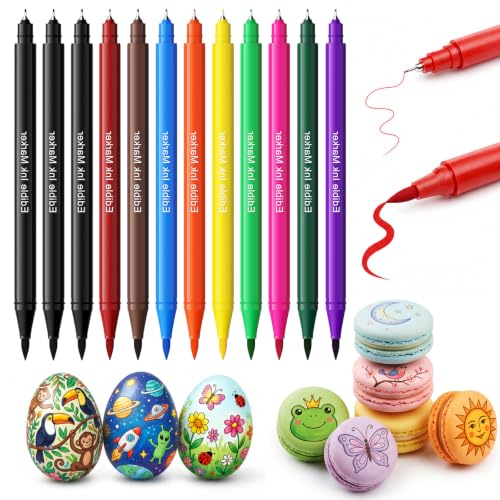
Best for: Home bakers decorating sugar cookies
The Jewem Edible Markers set includes 12 food-coloring pens in 10 colors, with three black pens for outlines and small details. Each pen has two tips: a 0.5 mm ultra-fine tip for lettering and line work, plus a wider tip for filling. The ink volume is 30% higher than the earlier version, according to the product description. At $14.99, the set offers a practical amount of color for cookie projects, parties, and family activities.
The food-grade ink is described as non-toxic, odorless, and tasteless, so it should not change the flavor of decorated foods. These markers work best on hard, dry surfaces, including sugar cookies, royal icing, fondant, macarons, gingerbread, and hard-boiled eggs. Light or white surfaces should produce the clearest color. The boxed 12-pack also works as a gift for home bakers, though its usefulness depends on the recipient already having suitable baked goods or icing ready.
Pros
- Two tip sizes handle both fine outlines and larger filled areas.
- Three black pens provide extra supply for lettering and detailed designs.
- Food-grade, tasteless ink suits family decorating activities.
Cons
- The markers perform best on hard, dry, light-colored surfaces, so they are not a general replacement for liquid food coloring.
- The set has 10 colors rather than 12 unique shades, since black is included three times.
3. Edible Markers Food Coloring Pens

Best for: Family cookie and Easter egg decorating
These edible markers give you 14 food-coloring pens for decorating cookies, fondant, frosting, desserts, and Easter eggs. Each pen has two ends: a fine tip for lettering and outlines, plus a thicker tip for filling areas and adding broad strokes. The set uses food-grade materials and is designed for direct use on baked goods without changing their taste or texture. At $14.99, it offers a simple way to add details without mixing separate icing colors.
The pens work best on smooth, dry surfaces. That includes cookies, cakes, fudge, pastries, white chocolate, donuts, marshmallows, and some fruits or vegetables. The color range can support names, faces, patterns, borders, and holiday designs. Kids can use them during family baking projects, classroom activities, or parties, though adult supervision still makes sense around food and small tools. The product description does not provide tip dimensions, ink volume, or drying time, so buyers should not expect precise information about coverage or storage life.
Pros
- Fourteen colors provide more variety than a small three- or six-color set.
- Double-ended tips handle both fine writing and thicker coloring.
- Food-grade markers suit dry, smooth foods such as cookies and fondant.
Cons
- They may perform poorly on wet, greasy, rough, or heavily textured surfaces.
- The listing does not state how much ink each pen contains or how long colors last after opening.
2. Treedoa Edible Food Coloring Markers, 12-Pack

Best for: home bakers decorating smooth treats
The Treedoa set includes 12 food-grade edible markers for cookies, cakes, fondant, frosting, macarons, Easter eggs, and other smooth, dry foods. Colors include red, pink, purple, orange, yellow, black, blue, grass green, dark green, brown, gold, and silver. Each marker has a fine tip for lettering and outlines, plus a wider tip for filling larger areas. The ink is described as tasteless, odorless, and non-toxic, so it should not change the food’s flavor or texture.
The gold and silver markers add options that many basic decorating sets lack. Most pens also include a small stamp on the cap for simple designs, although the gold and silver pens do not have seals. At $8.99, this set offers a low-cost way to add details without mixing icing colors. The pens work best on dry surfaces. After decorating, the ink must dry completely before handling the food or eggs. Buyers should also check each pen and cap after opening, since the package may arrive in older or updated packaging.
Pros
- Includes 12 colors, including gold and silver.
- Dual tips support fine writing and broader coloring.
- Works on cookies, fondant, frosting, eggs, and other smooth foods.
Cons
- The gold and silver pens do not include the cap stamp.
- Pens require completely dry surfaces and drying time before handling.
1. Edibleink Food Coloring Pens 11-Piece Double-Sided Markers

Best for: Home bakers decorating dry cookies
The Edibleink Food Coloring Pens set includes 11 double-sided markers for decorating fondant, cookies, royal icing, macarons, marshmallows, pastries, donuts, and hard-boiled eggs. Each pen has a fine tip for outlines and lettering, plus a broad chisel tip for filling larger areas. The set costs $12.95 and comes in a reusable plastic flip-top case.
The color selection covers red, yellow, blue, dark green, light green, pink, brown, purple, and orange, with two black pens for frequent outlining. That makes the set practical for basic designs without adding many duplicate colors. The ink uses food-grade ingredients and is described as non-toxic, odorless, and tasteless. It dries quickly and should create less smudging on dry, smooth surfaces. The main limitation is surface choice. These pens are not recommended for oily, wet, or fat-based foods, so they may not work well on buttercream or freshly glazed treats.
Pros
- Dual tips handle both fine lettering and broad color filling.
- Eleven pens include two black markers and nine useful colors.
- Reusable case keeps the markers together for storage or travel.
Cons
- The markers are limited to dry, smooth surfaces and may not work properly on oily or wet foods.
- The set does not include lighter shades or extra color duplicates for blending and larger projects.
Buying Guide
The most important factor is verified food safety. Choose markers labeled food-safe with a full ingredient list, since “non-toxic” alone does not mean the ink is suitable for food.
- Food-safe labeling: Look for a food-contact statement, allergen information, and a manufacturer’s name. Avoid markers that only claim “non-toxic” or “washable.”
- Tip size: Choose a 0.5–1 mm fine tip for lettering and small details. A 2–3 mm tip works better for large cookies and fondant shapes.
- Color selection: A 10–12-color pack covers basic decorating needs. Choose darker shades for pale icing, and confirm that the set includes black, red, blue, and yellow.
- Surface compatibility: Check that the markers work on your intended surface, such as fondant, royal icing, wafer paper, or chocolate. Some pens perform poorly on greasy coatings.
- Cap and storage: Select markers with tight-fitting caps and a stated storage range, ideally below 77°F (25°C). A resealable case helps prevent drying between uses.
If you cannot have everything, prioritize clear food-safe labeling and complete ingredient information over tip size, color count, or price.
Frequently Asked Questions
What are the best edible markers for decorating cookies?
The best edible markers for decorating cookies have food-safe ink, a firm tip, and color that dries without smearing. Look for dual-tip sets with a fine 0.5-millimeter point for lettering and a broader tip for filling small areas. They work best on dry royal icing or fondant, not wet frosting.
How do you choose the best edible markers for cakes?
Choose the best edible markers by matching their food-safe formula, tip size, and surface compatibility to your project. For cookies and fondant, use fine tips for names and outlines, then choose brush tips for larger details. A set with six colors covers basic decorating, but a 12-color pack gives more options.
Can edible markers be used on chocolate?
Yes, edible markers can be used on chocolate, but they work best on a smooth, dry surface. Use them after the chocolate has fully set, since moisture or cocoa butter can cause uneven lines. Fine tips suit lettering on molded pieces, while a 1-millimeter tip handles simple shapes. Test one small mark first.
Are edible markers safe for children?
Yes, edible markers are generally safe for children when the label identifies food-safe, edible ingredients and an adult supervises use. Do not treat craft markers as substitutes, even if colors look similar. Check the package for allergy information and an expiration date. Children should avoid chewing marker tips or sharing them.
Conclusion
Edibleink Food Coloring Pens 11-Piece Double-Sided Markers are the top choice for bakers who want a compact kit, two tip options per pen, and enough color variety for cookies, fondant, cake details, and other edible decorations. The format suits home bakers who want fine lines and broader strokes without buying separate pen types.
If your priority is the widest color selection for frequent decorating, choose a larger-count edible marker set instead, since more shades can reduce color mixing and help match detailed designs.
Before buying, double-check the marker size and tip design, compatibility with your intended foods, total quantity, and current price, since sellers may show different package details or change prices over time.