
6 Best Notebook for Hand Lettering for Beginners
Calligraphy Practice Paper Workbook is the top pick for most buyers seeking the best notebook for hand lettering because its guided practice format gives beginners a clear way to repeat strokes, letters, and words. It works more like a structured lesson book than a blank journal. That makes it a practical choice for building control before moving to freestyle layouts.
This guide is for beginners, hobbyists, and artists who want a dedicated place to practice hand lettering. The most important factors are page size and paper surface. A larger page gives letters room to breathe, while smooth, ink-friendly paper helps prevent skips, feathering, and uneven strokes. Ruling or guide lines also matter if you want consistent height and spacing. The 6 picks below are ranked with clear reasons and honest drawbacks for each, so you can choose a notebook that fits your tools and practice habits.
Quick Comparison
| # | Product | Best For | Price | |
|---|---|---|---|---|
| 1 | Calligraphy Practice Paper Workbook | Calligraphy Drill Practice | $5.99 | View → |
| 2 | Mastering Hand-Lettering Guide | Decorative Lettering Learners | $15.99 | View → |
| 3 | Mead 480018 Learn to Letter Writing Tablet | Structured Writing Practice | $14.93 | View → |
| 4 | Handwriting Practice Paper, 100 Blank Pages | High-Volume Handwriting Practice | $6.99 | View → |
| 5 | Tracing Letters and Numbers Workbook | Preschool Letter Recognition | $9.99 | View → |
| 6 | Lettering for Beginners: Creative Lettering Guide | Creative Lettering Beginners | $6.99 | View → |
6 Best notebook for hand lettering
These picks are ranked by paper quality, layout, durability, and value, counting down to the top pick.
6. Lettering for Beginners: Creative Lettering Guide

Best for: Adults starting hand-lettering practice
Lettering For Beginners is a $6.99 instructional guide focused on learning basic lettering skills. Its title identifies three useful parts: alphabet guides, project ideas, and practice pages. That gives new learners a simple path from studying letter shapes to using them in finished work. The listing does not provide a page count, book size, paper type, binding, or format, so buyers should confirm those details before ordering.
The alphabet guides can provide a reference while you practice individual letters and build consistency. Projects add a practical goal instead of leaving the book as a collection of drills. Practice pages also make repeated writing easier, especially for learners who need several attempts before their strokes look even. At this price, it could work as a low-cost starting point, but it may offer less depth than a larger lettering course or specialty workbook.
Pros
- Alphabet guides give beginners letter shapes to study and copy.
- Project prompts turn basic practice into finished lettering pieces.
- Practice pages provide dedicated space for repeated drills.
Cons
- The listing does not state the page count, dimensions, paper quality, or format.
- Beginners seeking advanced typography, lettering styles, or detailed technique lessons may need another resource.
5. Tracing Letters and Numbers Workbook

Best for: Preschoolers practicing early writing skills
Tracing Letters and Numbers is a 200-page practice workbook for children ages 3 to 5. Its focus is narrow and clear: helping young learners trace basic letters and numbers. At $9.99, it offers a low-cost option for home practice, preschool activities, or quiet table work.
The large page count gives children plenty of repetition, which can help build pencil control over time. It may also suit parents who want a simple workbook without extra lessons or complicated instructions. However, the available product details do not list the page size, paper type, binding, writing tools, or included teaching guidance. Buyers should check the listing images before ordering if those details matter.
Pros
- Includes 200 practice pages, giving children many opportunities to repeat letter and number tracing.
- Covers both letters and numbers in one workbook, which suits basic preschool skill practice.
- Targets children ages 3 to 5, making the content relevant to early learners.
Cons
- The product information does not specify paper quality, page dimensions, binding, or whether pages can handle markers.
- Its focus appears limited to tracing letters and numbers, so it may not replace a broader workbook with phonics, shapes, counting, or coloring activities.
4. Handwriting Practice Paper, 100 Blank Pages

Best for: Early letter-writing practice at home
This handwriting practice paper includes 100 blank writing pages for students learning to write letters. Its simple format gives children room to copy letters, practice names, or work through parent-created exercises. At $6.99, it provides a low-cost option for families, tutors, and classrooms that need repeated writing practice without buying a smaller workbook.
The main appeal is the page count. One hundred pages can support regular practice over many sessions, especially when each page covers a few letters or short words. The pages are blank, so adults can add their own examples, arrows, tracing lines, or prompts. That flexibility may suit children who need a slower pace or extra repetition. However, the available information does not list the paper size, page dimensions, paper weight, binding style, or whether the pages are single-sided. Buyers should confirm those details before ordering if they need a specific format. The product also does not state whether it includes alphabet examples or handwriting guides.
Pros
- Includes 100 pages, allowing extended letter-writing practice.
- Blank pages support custom prompts, tracing lines, and examples.
- The $6.99 price keeps the practice material budget-friendly.
Cons
- Blank pages provide no built-in lines, letter models, or tracing guides.
- Paper size, weight, and binding details are not provided, making classroom or binder compatibility unclear.
3. Mead 480018 Learn to Letter Writing Tablet

Best for: Early handwriting practice at home
The Mead Learn to Letter Writing Tablet gives children in pre-kindergarten through first grade a dedicated place to practice letters, numbers, and basic handwriting. The pack includes four tablets, each measuring 8 by 10 inches with 40 sheets, for 160 sheets total. At $14.93, it provides multiple practice books for home, classrooms, or tutoring sessions.
The pages use primary ruling with one solid line and dotted guides. Those lines are raised, so children can see and feel where letters should sit. That tactile design may help young writers keep their strokes within the writing area. The binding is smooth and holds the pages together during use. The tablets are not wipe-clean or reusable, so each practice attempt uses a sheet. The product is listed as developed and tested by handwriting experts, but the listing does not explain the testing process or provide specific results.
Pros
- Four 8-by-10-inch tablets provide 160 practice sheets.
- Raised solid and dotted lines give children visual and tactile writing guides.
- Smooth binding keeps the pages together during handwriting practice.
Cons
- The sheets are single-use paper, not reusable practice boards.
- The primary ruling targets early writers and may feel too basic for children who have moved to standard notebook lines.
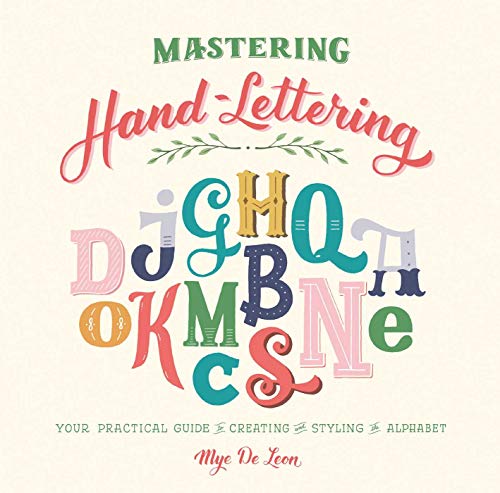
2. Mastering Hand-Lettering Guide
Best for: Beginners building a hand-lettering practice routine
Mastering Hand-Lettering is a 180-page softcover guide from Skyhorse Publishing. Priced at $15.99, it covers hand-lettering and calligraphy for practical projects, including cards, signs, chalkboards, reports, and signatures. The book focuses on shaping letters with a personal style, so it can support both polished and playful designs.
Its strongest feature is the range of instruction in one compact volume. Readers get an introduction to lettering, explanations of letter anatomy, tool guidance, finished examples, practice pages, tutorials, and exercises. That mix gives beginners more structure than a collection of alphabet samples alone. It also makes the book useful for artists who want to move between casual lettering and more formal calligraphy. The softcover format keeps the price manageable, but it may not hold up as well with frequent use on a desk or in a supply bag.
Pros
- Covers letter anatomy, tools, and technique in one 180-page guide.
- Practice pages and exercises provide structured work between tutorials.
- Applies lettering to cards, signs, chalkboards, reports, and signatures.
Cons
- The softcover binding may wear faster than a hardback with repeated use.
- Pens, nibs, ink, and other lettering supplies are not listed as included.
1. Calligraphy Practice Paper Workbook

Best for: Beginners seeking low-cost lettering practice
This $5.99 Caligraphy Practice Paper/Workbook is designed for people who want a dedicated place to practice hand lettering. Its title identifies it as a workbook for beginners, so it may suit shoppers who prefer paper practice over loose sheets or a digital lettering app. However, the available product information does not list the page count, paper size, paper weight, binding, pen compatibility, or included exercises. Those details matter because brush pens, markers, and fountain pens can behave differently on practice paper.
The main draw is the low price and focused purpose. A dedicated workbook keeps lettering practice in one place, which can help users build a regular routine. Still, there is not enough information to confirm whether it contains alphabet drills, tracing guides, blank grids, examples, or advanced projects. Buyers should view it as a basic practice-book option rather than a fully specified course. At $5.99, it may be a reasonable first purchase, but expectations should stay modest until the interior layout and paper quality are confirmed.
Pros
- The $5.99 price keeps the initial cost low.
- The beginner-focused format gives new letterers a dedicated practice book.
- The workbook design may be easier to organize than loose practice pages.
Cons
- The listing provides no page count, dimensions, or paper details.
- It does not confirm exercises, tracing guides, or pen compatibility.
Buying Guide
The most important factor is paper smoothness. A slick, even surface lets brush pens glide without catching, fraying, or skipping across the page.
- Paper weight: Choose 100 to 160 gsm for brush pens and markers. Paper below 90 gsm may show ink through the sheet.
- Surface finish: Look for smooth, coated, or ink-friendly paper. Avoid textured watercolor pages, which can damage flexible brush tips.
- Bleed resistance: Pick a notebook labeled for markers, or choose one with 120 gsm paper or heavier. Test dark colors on the back page before starting a project.
- Binding and page size: Lay-flat spiral or sewn binding works best for lettering practice. A5, about 5.8 by 8.3 inches, suits desks and bags, while A4 offers larger lettering space.
- Page count and cost: A 40 to 80-page notebook often costs $8 to $20. Select at least 50 sheets if you practice several times each week, since lettering uses pages quickly.
If you cannot have everything, prioritize smooth, bleed-resistant paper over cover design, page count, or binding style.
Frequently Asked Questions
What is the best notebook for hand lettering?
The best notebook for hand lettering has smooth, bleed-resistant paper, sturdy binding, and enough room for practice drills. Look for 120 to 160 gsm paper if you use brush pens, or 80 to 100 gsm paper for pencils and fineliners. A5 size offers portability while leaving space for alphabets, flourishes, and short quotes.
How do I choose the best notebook for hand lettering?
Choose the best notebook for hand lettering by matching its paper weight and texture to your tools, then checking its size and binding. Smooth 120 gsm paper suits brush pens, while dotted pages help keep letters aligned. For regular practice, A5 notebooks with 80 to 120 sheets balance writing space and portability.
Can I use a regular notebook for hand lettering?
Yes, you can use a regular notebook for hand lettering if its pages feel smooth and do not let ink bleed through. Test one back page first, especially with brush pens. Paper around 90 to 120 gsm usually handles pencils and fineliners better than thin 60 to 70 gsm school paper.
Are dotted or blank notebooks better for hand lettering?
Dotted notebooks are usually better for learning hand lettering, while blank notebooks suit artists who prefer unrestricted layouts. A 5 mm dot grid can guide letter height, baseline, and spacing without dominating the page. Choose blank paper for large compositions, lettering layouts, or practice with guidelines drawn in pencil.
Conclusion
Calligraphy Practice Paper Workbook suits lettering learners who want guided practice pages, repeatable drills, and a clear path from basic strokes to finished words. If your priority is portability or more creative freedom, choose a small mixed-media notebook with smooth, bleed-resistant paper instead, since it can hold finished designs without the workbook format. Before buying, double-check the page size, paper compatibility with your pens and markers, sheet quantity, and current price, because listings can change and some versions may not fit your workspace or preferred tools. A good notebook should match your lettering style, available desk space, and practice routine, not just its cover design or product photos.