
7 Best Watercolor Markers for Stamping on a Budget
For most buyers, Mr. Pen Watercolor Brush Pens are the top pick among the best watercolor markers for stamping because their flexible brush tips offer controlled ink placement and easy color blending. These water-based brush pens work well for handmade cards, journals, scrapbooks, and layered stamp designs. Their pen format also feels easier to manage than a paintbrush and water cup.
This guide is for crafters who want portable color, clean details, and softer stamped images. When choosing the best watercolor markers for stamping, focus on tip shape, ink water-solubility, color count, and how evenly the marker covers a stamp. A flexible tip helps with both broad areas and small edges, while water-reactive ink supports blending after stamping. The seven picks below are ranked with clear reasons and honest drawbacks for each. You will find options for casual projects, detailed work, and larger color sets.
Quick Comparison
| # | Product | Best For | Price | |
|---|---|---|---|---|
| 1 | Mr. Pen Watercolor Brush Pens | Travel sketching beginners | $6.99 | View → |
| 2 | ARTISTRO 24 Watercolor Markers | Large color variety users | $12.99 | View → |
| 3 | TOSHARE Double-Tip Watercolor Markers | Lettering and fine outlines | $4.99 | View → |
| 4 | nauets Dual Tip Watercolor Paint Markers | Two-style art projects | $13.99 | View → |
| 5 | Dual-Tip Watercolor Markers Pens | Budget-conscious mixed-media crafters | $19.99 | View → |
| 6 | Crayola Marker & Watercolor Pad | Kids’ watercolor practice pages | $5.35 | View → |
| 7 | KINGART 410-36 Watercolor Brush Markers | Detailed botanical illustrators | $19.03 | View → |
7 Best Watercolor Markers for Stamping
This list is ranked from the most practical stamping option down to the top pick, with key features and limits noted.
7. KINGART 410-36 Watercolor Brush Markers

Best for: Portable watercolor sketching and lettering
KINGART’s 410-36 set includes 36 water-based watercolor brush markers for drawing, coloring, calligraphy, manga art, and loose watercolor work. Each pen uses a flexible nylon brush tip that can produce fine, medium, or broad lines, depending on pressure. The inks are non-toxic, odorless, and acid-free, which suits classroom tables, home studios, and travel kits. The listed price is $19.03.
What stands out is the balance of color variety and portability. The set includes bright and darker shades across colors such as berry, black, brown, blue, green, orange, pink, purple, red, and yellow. You can blend colors, dilute marks into washes, or build shading with layered strokes. The water-based ink also supports gradients without the strong smell found in some solvent-based markers. A reusable plastic case keeps all 36 pens together, but the flexible tips need controlled pressure for clean lettering and narrow details.
Pros
- 36 colors provide a broad starting palette for sketches, cards, and illustrations.
- Flexible nylon brush tips support thin, medium, and broad strokes.
- Water-based, odorless ink works well for indoor creative projects.
Cons
- Water-based marks may not suit projects that need waterproof or permanent color.
- Soft brush tips can spread under heavy pressure, so beginners may need practice for consistent line widths.
6. Crayola Marker & Watercolor Pad

Best for: Kids’ marker and watercolor projects
The Crayola Marker & Watercolor Pad gives children 50 blank sheets for drawing, coloring, and painting. Each page measures 8 by 10 inches, a practical size for a desk, craft table, or backpack. The bright white paper provides a clean background for bold marker colors and painted details. At $5.35, it offers a low-cost way to keep art activities ready at home.
This is mixed-media paper made for water-based markers and watercolor paints. Its heavier construction should handle typical kids’ projects better than ordinary printer paper, which can buckle or tear when wet. The pad leaves plenty of room for free drawing, while an included project idea can help children get started. The pages are blank, so the pad works for coloring, simple paintings, letters, and seasonal crafts. Still, the 8-by-10-inch format gives children less space than a larger art pad, and the paper is intended for casual use rather than professional watercolor work.
Pros
- Includes 50 blank pages, giving kids many drawing and painting sessions.
- The 8-by-10-inch pages fit common desks, folders, and craft areas.
- Mixed-media paper is made for markers and watercolor paints.
Cons
- The standard 8-by-10-inch size may feel small for large projects.
- It may not satisfy older children or artists who need specialized watercolor paper for heavy washes.
5. Dual-Tip Watercolor Markers Pens

Best for: Adult coloring and bullet journals
These 72 dual-tip watercolor markers give you two useful point sizes in each pen. The 0.4 mm fine tip handles outlines, small details, and neat writing. On the other end, a 1-2 mm soft brush tip supports shading, broad fills, hand lettering, and beginner calligraphy. Water-based ink is listed as unscented and washable from skin and clothing, which suits home, classroom, and craft-table use. The set costs $19.99 and comes with a portable case.
The 72-color range gives you plenty of choices for patterns, flowers, animals, lettering, and sketches. The ink is designed to blend and layer, so you can build color instead of relying on a single flat shade. Replacement parts are included, with three brush tips and three fineliner tips. TOSHARE also lists a one-year warranty. Still, these are water-based markers, not professional watercolor paints, so paper choice will affect bleeding, blending, and finished color. Caps need to go back on promptly after use to protect both tips.
Pros
- Two tips cover detail work and larger coloring areas.
- 72 colors support blending, layering, and varied projects.
- The portable case and six replacement tips add practical value.
Cons
- Water-based ink may bleed through thin notebook or planner paper.
- The 1-2 mm brush tip may take time to cover large areas.
4. nauets Dual Tip Watercolor Paint Markers
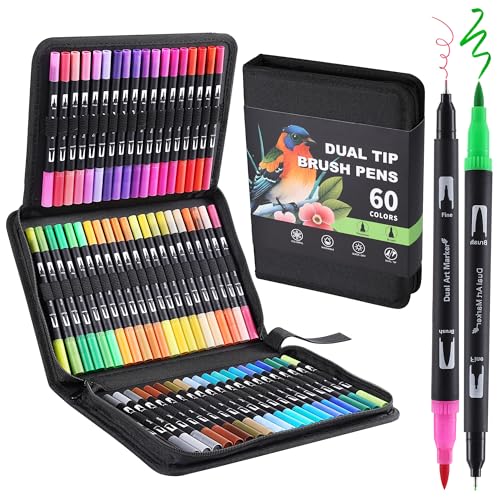
Best for: Coloring books and journaling
The nauets set includes 60 dual-tip watercolor markers for $13.99. Each marker has a 0.4mm fine tip for outlines, notes, and small details, plus a 1–2mm brush tip for shading and broader strokes. The water-based ink is listed as non-toxic, acid-free, and odorless. It should also wash from skin more easily than many permanent inks.
The color range suits coloring books, lettering, planners, cards, sketching, and basic illustrations. Caps match the ink colors, so finding a shade should take little time. The set comes in a zippered case with elastic holders, which keeps all 60 pens together during storage or travel. It also includes three replacement brush tips and three replacement fineliner tips. The maker recommends tightening each cap and storing the markers horizontally. That adds a storage step, but it may help keep the tips supplied with ink. As with most water-based markers, paper choice will affect blending, drying, and bleed-through.
Pros
- Two tip sizes cover fine details and broad coloring.
- Sixty colors provide a wide range for art projects.
- Zippered case, elastic loops, and six spare tips add practical value.
Cons
- Water-based ink may bleed through thin notebook or coloring-book paper.
- Horizontal storage takes more care than simply tossing markers in a drawer.
3. TOSHARE Double-Tip Watercolor Markers

Best for: Budget-friendly watercolor coloring and lettering
The TOSHARE set includes 12 water-based dye ink markers and one refillable water brush pen. Each marker has two ends: a 0.8mm fine tip for details and a flexible nylon brush tip that ranges from about 1mm to 6mm. That combination covers small outlines, broad fills, lettering, and simple illustrations without requiring separate pens. At $4.99, it offers an inexpensive entry point for coloring books, notes, crafts, and casual sketching.
The main draw is the water-based ink. You can layer colors, dilute them with water, and create lighter washes or gradual blends. The included brush pen provides a way to spread and soften marks, although the final effect will depend on the paper and the amount of water used. The brush tip is designed to bend with pressure, while the fine tip handles controlled lines. Color cleaning is also simple in principle, since scribbling on scrap paper helps clear leftover pigment. Still, this is a compact 12-color palette, not a full watercolor range.
Pros
- Includes 12 bright colors plus a refillable water brush pen.
- Dual tips cover 0.8mm detail work and 1mm to 6mm brush strokes.
- Water-based ink supports layering, dilution, shading, and color mixing.
Cons
- Twelve colors provide fewer blending options than larger marker sets.
- Water-based ink may bleed through thin coloring-book pages, so heavier paper is safer.
2. ARTISTRO 24 Watercolor Markers
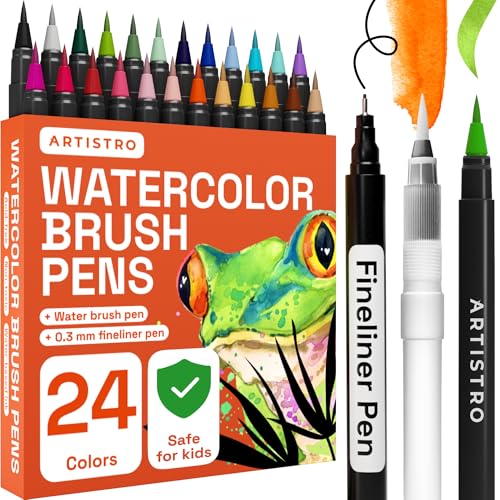
Best for: Budget-friendly coloring and manga sketching
The ARTISTRO set includes 24 watercolor markers at a $12.99 price. Each pen has a flexible nylon brush tip with a stated range of 0.05 to 5 mm, so users can draw fine lines or broader strokes by changing pressure. The tips are designed to stay moist, clean themselves, and resist fracturing. The pens use xylene-free, opaque ink and meet stated USA and EU safety requirements. They are also labeled non-toxic, acid-free, and washable.
This kit includes more than the markers. A water brush pen helps blend colors, while the fineliner adds details to lettering, sketches, and manga panels. A color chart provides a place to test the paints, and five postcards give you ready-made surfaces for practice. The markers can be used dry for stronger color or blended with water for softer transitions. That range suits coloring books, calligraphy, illustration, and basic painting. The 24-color selection keeps the set affordable, but it may feel limited for detailed artwork that needs many close shades.
Pros
- 24 colors provide a useful starter palette for coloring and illustration.
- Flexible nylon tips support line widths from 0.05 to 5 mm.
- The kit includes a water brush, fineliner, color chart, and five postcards.
Cons
- Twenty-four shades may not cover every skin tone, gradient, or detailed scene.
- Brush-tip width depends on hand pressure, so precise lines may take practice.
1. Mr. Pen Watercolor Brush Pens

Best for: Budget-friendly watercolor-style lettering
Mr. Pen’s watercolor brush pen set includes 36 water-based colors for calligraphy, coloring, lettering, and watercolor-style artwork. At $6.99, it offers a large color range for students, hobbyists, and artists who want more options than a small starter set. The ink is vivid and designed to blend, layer, and shade on paper.
Each pen uses a brush tip made from high-quality fibers. That tip can create thin lines with light pressure and broader strokes with more pressure, making it useful for both detail work and bold washes. The pens are made to glide across paper with a steady color flow, which helps reduce uneven marks during coloring. Since the ink is water-based, you can soften edges or mix colors with water for gradient effects. Paper choice still matters, though. Thin sheets may show ink on the reverse side or buckle when you add water. The brush tips also require controlled pressure, especially for neat lettering.
Pros
- 36 colors provide a broad palette for coloring, lettering, and art projects.
- Fiber brush tips support both fine strokes and wider watercolor-style marks.
- Water-based ink allows blending, layering, shading, and water-activated effects.
Cons
- Thin paper may bleed through or warp when the ink is heavily layered or diluted.
- Brush tips are less suitable for tiny, uniform lines than fine-point markers.
Buying Guide
The most important factor is the ink formula. Choose water-based, water-soluble dye ink made for stamping, because it should transfer evenly before drying on the stamp or soaking through paper.
- Ink type: Look for acid-free, non-toxic, water-based ink. Avoid alcohol markers, which can dry too quickly and may affect some clear stamps.
- Tip shape: Pick a flexible brush tip about 1 to 6 mm wide. It covers large stamp areas while still handling narrow outlines and lettering.
- Working time: Favor markers that stay wet on the stamp for at least 15 to 30 seconds. That gives you time to color several sections before pressing.
- Color selection: A 12-color pack suits basic cards and tags. Choose 24 or more colors for layered shading without mixing every shade.
- Paper fit: Use smooth cardstock between 80 and 110 pounds. Test one impression first, then add a light water mist only if the brand permits it.
If you cannot have everything, prioritize the ink formula and working time over pack size or extra tip styles.
Frequently Asked Questions
What are the best watercolor markers for stamping?
The best watercolor markers for stamping have water-based, blendable ink, flexible brush tips, and enough pigment to transfer through a rubber or clear stamp. Choose brush-tip markers rather than hard bullet tips, and test one impression on scrap paper before using a light water mist. This helps reveal bleeding or weak coverage.
How do you use watercolor markers for stamping?
To use watercolor markers for stamping, color the stamp, lightly mist it with water, and press it onto absorbent paper. Work in small sections if the design uses several colors, then clean the stamp before the ink dries. Start with one or two light sprays, since excess water can blur fine lines.
Can any watercolor marker be used for stamping?
Not every watercolor marker works for stamping, because some have dry, pale ink or tips that cannot cover a stamp surface evenly. Look for water-based ink and a brush tip, then check the label for paper use. A 0.5 to 1 millimeter detail tip may miss broad stamp areas.
Are watercolor markers better than ink pads for stamping?
Watercolor markers are better than ink pads for stamping when you want blended colors or small color changes, but ink pads usually give faster, more even coverage. Markers let you color separate parts of one stamp, while an ink pad covers it in one pass. A stamp with 3 colors may need several marker passes.
Conclusion
Mr. Pen Watercolor Brush Pens are the top pick for crafters who want soft color, flexible brush tips, and an easy way to stamp cards, journals, and scrapbook pages. If your priority is sharper stamped detail or a lower-cost setup, choose a water-based marker set with firmer tips and colors that match your project. Before buying, double-check each set’s pen size, compatibility with your stamp material and paper, marker quantity, and current price, since listings and bundle contents can change. Use light ink coverage for pale impressions, then add layers after the first pass dries. A small water brush can soften edges, but excess water may blur fine lines. Store capped markers according to the package directions.