
6 Best Markers for Skin Tone for Artists
For the best markers for skin tone, ARTISTRO Acrylic Paint Marker Pens are the top pick for most buyers because their opaque acrylic paint can cover paper, canvas, wood, and other craft surfaces. This makes them useful for portraits, figures, handmade cards, and painted details, not just skin-colored areas. The set also gives shoppers a practical way to layer lighter and darker shades, though the exact color mix depends on the package selected.
This guide is for artists, crafters, parents, and anyone adding realistic or stylized skin tones to a project. The key choices are tip size, opacity, and the range of light, medium, and dark colors included. Fine tips suit facial details, while wider tips cover larger areas faster. The six picks below are ranked with clear reasons and honest drawbacks for each, so you can match a marker set to your project.
Quick Comparison
| # | Product | Best For | Price | |
|---|---|---|---|---|
| 1 | ARTISTRO Acrylic Paint Marker Pens | Crafters Decorating Wood And Glass | $15.99 | View → |
| 2 | Crayola Colors of the World Markers | Kids Exploring Diverse Skin Tones | $7.99 | View → |
| 3 | Ohuhu Alcohol Markers, Brush and Fine Tip | Illustrators Needing Flexible Line Widths | $36.79 | View → |
| 4 | ARTISTRO 12 Skin Tones Paint Pens | Portrait Artists Painting Skin Details | $9.99 | View → |
| 5 | Sharpie Permanent Markers, Fine Point, 12 Count | Everyday Labeling And Note-Taking | $13.49 | View → |
| 6 | Ohuhu Alcohol Markers, Skin Tone Set | Manga Artists Shading Warm Complexions | $17.09 | View → |
6 best markers for skin tone, ranked
This list is ranked in order, counting down to our top pick for quick comparison.
6. Ohuhu Alcohol Markers, Skin Tone Set
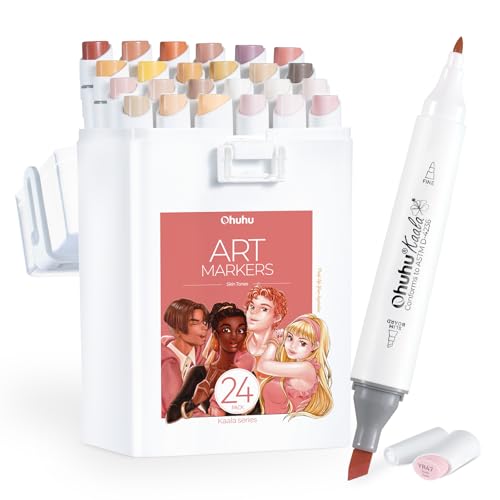
Best for: Portrait artists building skin-tone palettes
The Ohuhu Alcohol Markers set includes 24 skin-tone colors and one colorless blender, priced at $17.09. It targets portrait work, with shades for different complexions, flesh tones, and hair. Each marker has two ends: a broad tip for larger areas and a fine tip for details. The alcohol-based ink dries quickly, which helps reduce smearing during layered coloring.
The markers come in a carry case with color-coded caps, so the shades are easier to sort and identify. The case also has a drawable surface for personal labeling or decoration. Refill options are available for 51 Ohuhu colors, although this particular set focuses mainly on skin-related shades. The ergonomic barrel may feel more comfortable during longer sessions, but grip comfort will vary by hand size. As an art-supply safety detail, the set conforms to ASTM D-4236 standards.
Pros
- Twenty-four coordinated skin colors provide more portrait shading options than a small basic set.
- Broad and fine tips handle both coverage and facial details with one marker.
- A colorless blender supports smoother transitions, while the case keeps all 25 markers together.
Cons
- The narrow color focus limits usefulness for landscapes, clothing, and colorful illustrations.
- Alcohol ink can bleed through ordinary paper, so users may need marker paper or a protective sheet underneath.
5. Sharpie Permanent Markers, Fine Point, 12 Count

Best for: Portraits on mixed-media surfaces
Sharpie’s Special Edition Portrait Colors set includes 12 fine-point permanent markers in assorted skin tone shades. The colors are designed for portraits and artwork that represents a wider range of people. Each marker uses permanent ink that works on paper, plastic, metal, and many other common surfaces. At $13.49, the set costs about $1.12 per marker.
The main appeal is the focused color selection. Instead of relying on one tan or brown marker, artists get several shades for layering, outlining, and adding small facial details. The fine point supports controlled lines, facial features, hair strands, and written labels. The ink dries quickly, then resists water and fading better than standard washable markers. Since the ink is permanent, these markers can also handle craft projects on harder materials. They are less suited to broad color fills, though, and the 12 shades cannot represent every skin tone without mixing or adding other colors.
Pros
- Includes 12 assorted skin tone shades for portrait work and character art.
- Permanent ink marks paper, plastic, metal, and other surfaces.
- Fine points create controlled lines, while quick-drying ink resists water and fading.
Cons
- Permanent ink may bleed through thin paper and can be difficult to remove.
- Fine points cover large areas slowly, and the fixed 12-color range may not match every complexion.
4. ARTISTRO 12 Skin Tones Paint Pens

Best for: Fine-detail portraits on craft surfaces
The ARTISTRO set includes 12 paint pens in skin-tone shades for portraits, illustrations, labels, and small craft details. Each pen has a 0.7 mm extra-fine tip, which suits outlines, facial features, lettering, and other precise marks. The ink is designed for glass, paper, fabric, stone, plastic, metal, and wood. At $9.99, the set offers a focused color range without requiring a large multi-color pack.
The main draw is the selection of natural-looking tones, especially for portrait work. The paint is described as fast-drying and made for smooth coverage with fewer visible streaks. On black or white paper, the markers can create different visual effects, while the glitter finish adds extra contrast to decorations and gifts. They are also intended for projects such as rock painting, glass marking, holiday crafts, birthday gifts, and wedding decor. The pens conform to ASTM D-4236 standards, but buyers should still follow normal art-supply safety practices.
Pros
- Twelve coordinated skin-tone colors support realistic portraits and illustrations.
- The 0.7 mm tip allows detailed outlines, lettering, and facial features.
- Works across glass, fabric, stone, wood, metal, plastic, and paper.
Cons
- The set focuses on skin tones, so it lacks broad colors for complete scenes or large designs.
- Extra-fine tips cover small areas slowly and may not suit wide backgrounds or filled shapes.
3. Ohuhu Alcohol Markers, Brush and Fine Tip

Best for: Portrait artists building skin-tone studies
The Ohuhu Alcohol Markers set includes 36 skin-tone colors and one colorless blender, giving portrait artists 37 markers for flesh, hair, and shading work. Each marker has a brush tip for broad strokes and a fine tip for details. The alcohol-based ink dries quickly, which can reduce smudging, but it may bleed through thin paper.
What stands out is the refillable design. Ohuhu offers refills across 101 colors, including shades from its Honolulu, Oahu, Kaala, and Molokai lines. Replacement brush tips are also available, so worn tips do not automatically end a marker’s useful life. Color-coded caps make selection easier, and the included carrying case keeps the set together. At $36.79, the set offers a focused palette for portrait work, though buyers should not expect the same range as a full-color marker collection.
Pros
- Focused color range: 36 skin-tone shades support gradual shading and complexion studies.
- Two useful tips: Brush and fine tips handle broad fills, outlines, and small facial details.
- Refillable construction: Compatible ink refills and replacement brush tips can extend marker use.
Cons
- Limited subject range: The palette centers on skin and hair, so landscape or colorful illustration work may require another set.
- Paper choice matters: Alcohol ink can bleed through standard printer paper, so marker paper or a protective sheet is often necessary.
2. Crayola Colors of the World Markers

Best for: Classroom coloring and skin-tone art
Crayola Colors of the World Markers come as a 24-count set for drawings, coloring books, school projects, and craft rooms. The collection focuses on skin-tone shades rather than a standard mix of bright primary colors. Names include Deepest Almond, Medium Golden, and Light Rose, giving children more choices when drawing people, families, and characters. At $7.99, the set costs about 33 cents per marker, before tax.
The main strength is range. A single pack gives kids many skin-color options without asking them to mix colors or settle for one “flesh” shade. The markers can add detail to coloring pages and work well beside crayons or colored pencils. They are washable from skin and most washable clothing, which helps with younger artists, though washable does not mean stain-proof on every fabric or surface. Packaging can vary, and some packages may not print the washable label. That difference could confuse shoppers, but the product information identifies these markers as washable.
Pros
- 24 skin-tone colors offer more choice for people-focused drawings.
- Washable ink cleans from skin and most washable clothing.
- The $7.99 price fits classroom and craft-room restocking.
Cons
- This set focuses on skin tones, so it lacks common colors like blue, green, and purple.
- Washability depends on the fabric and surface, so spills can still leave stains.
1. ARTISTRO Acrylic Paint Marker Pens

Best for: DIY artists needing skin-tone shades
The ARTISTRO set includes 24 acrylic paint markers in skin-tone colors for portraits, character art, crafts, and journaling. Each marker has two tips: a 1 mm fine tip for outlines and details, plus a flexible brush tip that ranges from 1 to 5 mm for broader strokes. The water-based acrylic paint is opaque and richly pigmented, though coverage can change with the surface and background color.
These markers work on paper, canvas, wood, rocks, ceramic, glass, and metal. Their cotton nibs come pre-activated, so they do not need pump-action pressing before use. Store the pens horizontally and shake them gently before the first use. A scrap-paper test can help confirm the paint flow. Non-porous surfaces may need extra drying time, and the paint may require suitable sealing for projects that face handling or moisture. At $15.99, the set offers two useful line widths in every color, but it is aimed at art and craft use rather than permanent industrial marking.
Pros
- Two tip styles: The 1 mm fine tip handles details, while the 1–5 mm brush tip supports thicker strokes and lettering.
- Broad surface range: The acrylic paint can be used on paper, canvas, wood, rocks, ceramic, glass, and metal.
- Ready-to-use design: Pre-activated cotton nibs remove the need to press or pump each marker before painting.
Cons
- Drying time varies: Glass, ceramic, and metal can take longer to dry than paper or canvas.
- Coverage is surface-dependent: Dark or uneven materials may need extra layers, and the set may not replace a full range of paint colors.
Buying Guide
The most important factor is the intended surface. Markers made for paper can contain dyes or solvents that should not touch skin, while cosmetic body markers must carry clear skin-use labeling.
- Skin safety: For body art, choose markers labeled non-toxic and intended for skin, with ingredients listed and an ASTM D-4236 or cosmetic safety claim. Never use permanent office markers on skin.
- Tone range: For portrait work, choose at least 12 shades, including two light neutrals, four mid-tones, four deep browns, and two pink or yellow modifiers. A 24-pack offers better blending.
- Marker type: Alcohol markers blend smoothly on cardstock but can bleed through paper. Water-based markers suit children and thin drawing paper, though layered colors may streak.
- Tip design: Dual-tip markers with a 1 to 3 mm fine tip and a 4 to 6 mm chisel or brush tip handle both outlines and larger areas. Replaceable tips can reduce waste.
- Lightfastness and cost: For artwork meant to last, look for lightfast ratings of at least three stars or “archival” labeling. Expect about $10 to $25 for a 12 to 24-count set.
If you cannot have everything, prioritize the correct surface rating, especially when markers will touch skin.
Frequently Asked Questions
What are the best markers for skin tone?
The best markers for skin tone are cosmetic-grade, non-toxic body markers made for skin, not ordinary art markers. Look for sets with at least six shades, from pale beige through deep brown, so you can blend undertones. Patch-test first, and stop if burning or itching occurs.
How do you choose the right skin-tone marker?
Choose a skin-tone marker by matching its undertone, tip size, and intended use to your project. Warm markers suit golden or peach skin, while cool markers suit pink or neutral skin. For portraits, a 1-to-3-mm bullet or fine tip gives better control than a broad chisel tip. Choose cosmetic-grade ink for skin contact.
Can you use regular markers on skin?
No, regular art markers should not be used on skin because their inks may contain solvents, dyes, or preservatives not rated for body contact. They can stain for several days and may cause irritation, especially on broken or sensitive skin. Use markers labeled for cosmetic or face-and-body use, and patch-test a small 1-inch area first.
Are alcohol markers safe for skin?
Most alcohol markers are not safe for skin unless the product label specifically says it is cosmetic-grade and approved for body use. Art markers often contain fast-drying solvents, and their color can remain visible for 2 to 5 days. For temporary designs, choose face paint or body markers, then follow the maker’s removal instructions.
Conclusion
ARTISTRO Acrylic Paint Marker Pens are the top choice for artists who want acrylic color for skin-tone craft work on common surfaces. If your priority is easy cleanup rather than permanent coverage, choose a water-based marker set instead, since it suits paper projects and younger artists better. Before buying, double-check the marker size, surface compatibility, quantity, and current price, because listings can change and larger sets may cost more than expected. Also check whether the ink needs sealing on wood, glass, or polymer clay. A small test area can prevent staining, feathering, or an unwanted finish. Pick the set that matches your surface, project type, cleanup needs, and budget.