
6 Best Cap Stapler for Small Shops
The SENCO CS61H1 Pneumatic Cap Stapler is the best cap stapler for most buyers. Its main advantage is a pneumatic design that delivers consistent fastening across common building materials without relying on a rechargeable battery. It suits jobs such as attaching housewrap, insulation, roofing underlayment, and similar sheet goods.
This guide is for contractors, remodelers, and homeowners who need cleaner, faster fastening than standard staples provide. The key choices are cap and staple compatibility, plus the materials you plan to fasten. Air supply also matters, since a pneumatic tool needs a suitable compressor and hose. The 6 picks below are ranked by intended use, practical strengths, and overall value. Each entry includes clear reasons to consider it and honest drawbacks, so you can match the tool to your projects and workspace.
Quick Comparison
| # | Product | Best For | Price | |
|---|---|---|---|---|
| 1 | SENCO CS61H1 Pneumatic Cap Stapler | High-Volume Roofing Fastening | $249.00 | View → |
| 2 | Metabo HPT N3808AP 18-Gauge Crown Stapler | Trim And Upholstery Projects | $289.00 | View → |
| 3 | STINGER CS150B Pneumatic Cap Stapler | Housewrap And Insulation Installation | $269.00 | View → |
| 4 | Stinger CS150B Pneumatic Cap Stapler | Portable Cap Stapling Jobs | $419.99 | View → |
| 5 | STINGER CH38A Autofeed Cap Staple Hammer Tacker | Hammer-Style Roofing Repairs | $82.99 | View → |
| 6 | STINGER 0136044 Cap Staples | Replacement Staples For Cap Staplers | $55.95 | View → |
6 best cap stapler picks
These picks are ranked by features, value, and ease of use, counting down to the top cap stapler.
6. STINGER 0136044 Cap Staples

Best for: CS150B users covering large roof areas
This StaplePac supplies the fasteners for the STINGER CS150B pneumatic cap stapler. It includes 2,000 plastic 1-inch caps and 2,000 7/8-inch staples. The staples use an 18-gauge wire and a 7/16-inch crown. Their 22mm length and 11mm crown meet ASTM F1667 requirements. This setup fits common exterior sheathing and underlayment work.
The package contains 10 rolls with 200 caps each, plus 20 strips holding 100 staples each. One pack covers approximately 25 square, so it suits a sizable installation before a refill becomes necessary. The broad caps help distribute pressure across housewrap, synthetic underlayment, or foamboard. That can reduce the risk of tearing thin sheet materials compared with narrow staples. The main standout is the matched cap-and-staple format, which reduces manual loading during repetitive fastening. It is not a general-purpose staple refill, though. This pack is made specifically for the pneumatic CS150B.
Pros
- Includes 2,000 caps and 2,000 staples for extended installation work.
- One-inch caps spread holding pressure across housewrap and underlayment.
- 18-gauge, 7/8-inch staples meet ASTM F1667 requirements.
Cons
- Works only with the STINGER CS150B Cap Stapler, limiting compatibility.
- A single pack covers about 25 square, so larger projects may require multiple packs.
5. STINGER CH38A Autofeed Cap Staple Hammer Tacker
Best for: Roofing crews fastening sheet materials
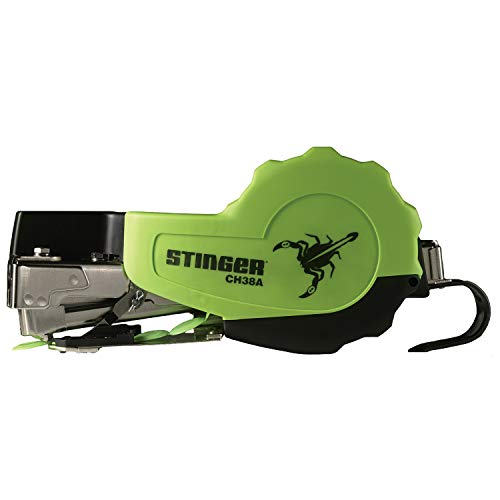
The CH38A is a manual cap staple hammer tacker for attaching housewrap, roofing underlayment, and rolled insulation. At 2.9 pounds (1.31 kg), it uses a swing instead of a trigger. Each completed strike automatically feeds the next cap and staple into position. It accepts 1-inch plastic caps with 3/8-inch crown staples, a combination suited to securing sheet materials while spreading pressure over a wider area than a staple alone.
Its magazine holds 168 caps and 168 staples, giving users a matched load before reloading. The internal-strength handle is built for repeated swings, while the grip provides a more comfortable hold. This is a purpose-built tool, not a general stapler. It must use STINGER 3/8-inch StaplePac 0136420, collated caps, and A-11 20-gauge crown staples. At $82.99, its value depends on how often you install compatible cap fasteners, since those supplies create an ongoing cost.
Pros
- Automatic cap and staple feeding removes the need for a separate trigger pull.
- Holds 168 caps and 168 staples for fewer magazine reloads.
- The 1-inch caps help distribute fastening pressure across housewrap and insulation.
Cons
- It only works with specified STINGER caps and 3/8-inch staple supplies.
- A 2.9-pound hammer tool can require noticeable physical effort during long installations.
4. Stinger CS150B Pneumatic Cap Stapler

Best for: Roofers and siding crews covering large areas
The Stinger CS150B is a pneumatic cap stapler for installing housewrap, foamboard, underlayment, and similar sheet materials. This kit includes the stapler, carrying case, belt hook, air fitting, and 8,000 plastic-collated cap staples. The staples arrive in four StaplePac boxes, with enough material for about 100 squares, depending on spacing and job conditions. It uses 18-gauge staples and a 200-cap magazine, so crews can cover more area between reloads.
Its strongest feature is the combination of capacity and control. The tool supports bumpfire for faster repetitive work and sequential firing for more deliberate placement. A Quick Clear lever helps remove jams, while tool-free depth adjustment lets users set staple penetration without a wrench. The 360-degree adjustable exhaust can direct airflow away from the work area. At $419.99, the package makes more sense for frequent installation work than occasional repairs. The main catch is compatibility: it must use STINGER StaplePac products, including part numbers 0136024, 0136044, 0136074, and 0136094.
Pros
- Includes 8,000 staples, enough for approximately 100 squares.
- Holds 200 caps and 200 staples, reducing reload frequency.
- Bumpfire, sequential firing, and tool-free depth control suit different tasks.
Cons
- Requires a pneumatic air compressor and hose, neither listed in the kit.
- Uses STINGER StaplePac caps and staples, limiting replacement options.
3. STINGER CS150B Pneumatic Cap Stapler

Best for: High-volume housewrap installation crews
The STINGER CS150B is a pneumatic collated cap stapler for attaching housewrap, foamboard, underlayment, and similar sheet materials. It uses 18-gauge staples with plastic caps, and its magazine holds 200 caps plus 200 staples. That capacity can reduce reloads during larger jobs. The $269 price also includes a belt hook, air fitting, carrying case, and an enhanced cap magazine.
Its standout feature is the mix of speed and control. STINGER rates the tool for installation up to 50% faster than standard methods, though actual results depend on the material, compressor, and operator. Bumpfire mode supports faster repetitive work, while sequential firing offers more deliberate placement. A tool-free depth adjustment helps control staple seating, and the 360-degree tool-free exhaust lets users direct discharged air away from the work area. The Quick Clear lever also provides a faster way to remove jams. This stapler works exclusively with STINGER StaplePac caps and staples, including part numbers 0136024, 0136044, 0136074, and 0136094.
Pros
- 200-cap and 200-staple capacity limits reloads on larger installations.
- Bumpfire and sequential modes suit both speed and placement control.
- Tool-free depth adjustment, exhaust direction, and jam clearing simplify setup.
Cons
- It requires an air compressor, which adds equipment and limits portability.
- Exclusive STINGER StaplePac consumables can restrict purchasing options and add ongoing supply costs.
2. Metabo HPT N3808AP 18-Gauge Crown Stapler

Best for: Roofers installing felt and house wrap
The Metabo HPT N3808AP is a pneumatic 18-gauge crown stapler for roofing felt, foam insulation, and house wrap. It uses 7/16-inch crown staples in 7/8-inch, 1-1/4-inch, or 1-1/2-inch lengths. Its basket holds 200 caps, while the magazine stores 200 staples. At $289, it targets contractors who need a dedicated fastening tool rather than a general-purpose stapler.
The 4.8-pound body and ergonomic shape should reduce fatigue during long work periods. A tool-free depth adjustment helps set fasteners for different materials and thicknesses. The red trigger fires one staple per pull, while the black trigger supports bump firing for faster coverage. A 360-degree adjustable air deflector directs exhaust away from the user or work surface. Metabo HPT says this system offers stronger hold and shear values than common 3/8-inch systems, and the company recommends using its own staples for best results. Builder and Developer Magazine has rated it Pro Preferred from 2014 through 2025.
Pros
- Stores 200 staples and 200 caps for fewer reloads.
- Accepts three staple lengths for varied materials.
- Dual triggers support controlled or rapid firing.
Cons
- Requires an air compressor, hose, and compatible fittings.
- Metabo HPT staples are recommended, which can limit replacement options.
1. SENCO CS61H1 Pneumatic Cap Stapler

Best for: Housewrap and foamboard installers.
The SENCO CS61H1 is a pneumatic cap stapler for housewrap, foamboard, underlayment, and similar sheet materials. It drives 3/8-inch crown, 18-gauge staples from 5/8 to 1-1/2 inches, including 7/8-inch and 1-1/4-inch options. Its top-load magazine holds 125 staples and up to 200 caps, which reduces reloads on smaller jobs. A 1/4-inch male coupler comes included, but you still need an air compressor and hose.
The in-line magazine gives you a clearer view of the nose and work surface. A spring-loaded door helps keep caps contained, while the alignment plate keeps each cap positioned during firing. The cap bypass switch drives staples without caps, which suits door and window jambs. Wear guards protect high-contact areas from jobsite wear. SENCO includes a carrying case, parts chart, manual, and five-year warranty. The CS61H1 received a 2025 Pro Tool Innovation Award, but buyers should still check air requirements and fastener costs.
Pros
- Holds 125 staples and 200 caps for fewer reloads.
- Cap bypass switch supports cap-free stapling.
- Alignment plate helps reduce missed cap placements.
Cons
- Requires a compatible air compressor, hose, and fittings.
- Listed fasteners come from SENCO, which can limit buying options and increase ongoing costs.
Buying Guide
The most important factor is compatibility with your caps and staples. A stapler that accepts 1-inch plastic caps but requires 1/2-inch staples will not suit every roofing, insulation, or housewrap job.
- Fastener compatibility: Confirm the tool supports your cap diameter and staple size. Common combinations include 1-inch caps with 3/8- to 1/2-inch staples, but models vary.
- Power source: Choose manual operation for occasional repairs, or pneumatic power for more than 200 fasteners per day. Pneumatic models usually need a compressor producing about 90 PSI.
- Magazine capacity: Look for a magazine holding at least 100 staples and caps. A larger capacity reduces reloads when covering walls, floors, or roof sections.
- Material range: Check the recommended materials before buying. For insulation and housewrap, select a model rated for wood and capable of driving staples through material up to 1/2 inch thick.
- Handling and cost: Manual cap staplers often cost $25 to $60, while pneumatic versions commonly cost $70 to $180 before compressor costs. A tool under 3 pounds helps during overhead work.
If you cannot have everything, prioritize fastener compatibility, because the wrong cap or staple size can make the tool unusable.
Frequently Asked Questions
What is the best cap stapler for roofing?
The best cap stapler for roofing is one that accepts the cap size your project requires, clears jams easily, and fits your hand. Choose a model with a comfortable grip, a visible loading area, and a replaceable driver if available. Some jobs use plastic caps around 1 inch wide, while others need smaller caps.
How does a cap stapler work?
A cap stapler drives a staple through a plastic or metal cap, spreading pressure across the material instead of tearing it. You load compatible staples and caps, press the nose against the surface, and squeeze the handle or trigger. Manual models suit light repairs, while pneumatic versions reduce effort during long installation runs.
Can I use a cap stapler for insulation?
Yes, you can use a cap stapler for insulation when the tool and fasteners match the insulation type and thickness. Plastic caps help hold faced or unfaced batts and foam sheets without concentrating force at one small point. Check the fastener range first, since some tools accept caps from about 1/2 to 1 inch.
Are cap staplers better than regular staplers?
Cap staplers are usually better than regular staplers for soft insulation, housewrap, and roofing underlayment because the cap spreads the load. A regular staple can pull through thin material, especially when wind or handling adds stress. Cap tools cost more, though, and their caps and staples may need separate replacement packs.
Conclusion
The SENCO CS61H1 Pneumatic Cap Stapler is the top recommendation for contractors and serious DIY users who need fast, consistent cap fastening across larger roofing or construction jobs. If your priority is portability and occasional repairs, choose a lighter manual cap stapler instead, since it avoids an air compressor and costs less to keep ready. Before buying, double-check the stapler’s supported cap size, compatibility with your chosen fasteners and compressor, included cap quantity, and current price. Also confirm the tool’s weight, hose connection, and warranty terms. A pneumatic model makes the most sense when speed matters, but a manual option can be easier to store and use for short, infrequent projects. Pick the tool that matches your workload.