
7 Best Lab Notebook for Daily Lab Notes
BookFactory Lab Notebook is the top pick for most buyers because it offers a purpose-built format for recording experiments, observations, and results in one organized place. If you need the best lab notebook for routine school, research, or work use, BookFactory is a practical starting point. Its lab-focused layout supports clearer recordkeeping than a standard ruled journal, while the product line gives shoppers multiple formats to compare.
This guide is for students, technicians, researchers, and anyone who needs reliable paper records. Focus first on notebook size and page capacity, since both affect portability and how long one book will last. Paper quality and binding also matter, especially when notes include diagrams, measurements, or pasted documents. The 7 picks below are ranked with clear reasons and honest drawbacks for each, so you can match the notebook to your workspace and recording habits.
Quick Comparison
| # | Product | Best For | Price | |
|---|---|---|---|---|
| 1 | BookFactory Lab Notebook | Researchers needing durable lab records | $24.99 | View → |
| 2 | BARBAKAM Lab Notebook 100-Page Spiral Bound | Students needing 100-page spiral binding | $29.95 | View → |
| 3 | National 43649 Laboratory Notebook | Organized experiment documentation | $16.24 | View → |
| 4 | Yeplan Chemistry Lab Notebook | Chemistry students tracking reactions | $15.99 | View → |
| 5 | Yeplan Carbon Copy Laboratory Notebook | Duplicate-copy experiment record keeping | $15.99 | View → |
| 6 | BookFactory Professional Lab Notebook | Professional laboratory documentation | $34.99 | View → |
| 7 | Clever Fox Laboratory Notebook | Lab planning and progress tracking | $15.99 | View → |
7 Best lab notebook Picks for Your Workbench
The list is ranked from seventh to first, counting down to our top pick for easy comparison.
7. Clever Fox Laboratory Notebook

Best for: chemistry students and lab researchers
The Clever Fox Laboratory Notebook is a dark blue hardcover logbook priced at $15.99. Its 8.5 x 11-inch pages provide room for procedures, measurements, formulas, diagrams, tables, and longer research notes. With 110 numbered pages, it can hold a substantial record of experiments without relying on loose sheets.
Each page has dedicated fields for the project or title, date, time, experiment ID, operator initials, notes, calculations, sign-off, and continuation details. That layout supports consistent records across repeated lab sessions. A front table of contents lets you list the subject, date, ID, and page range for faster reference later. The included reference material adds practical value, with common solvents, safety and handling symbols, equations, unit conversions, and a periodic table. The format fits academic lab work and patent-related documentation, though users should still follow their institution’s recordkeeping and safety rules.
Pros
- Numbered pages and sign-off fields create a clear record trail.
- The 8.5 x 11-inch format accommodates detailed data and diagrams.
- Reference pages keep solvents, conversions, safety icons, and periodic information nearby.
Cons
- The full-size format takes more bag space than a smaller field notebook.
- Long-term projects may use all 110 pages quickly, especially with full-page procedures and calculations.
6. BookFactory Professional Lab Notebook

Best for: regulated lab records and daily bench notes
This BookFactory Professional Grade Lab Notebook is a hardbound record book for experiments, observations, and controlled documentation. It measures 8 by 10 inches and contains 96 pages of 60-pound, acid-free archival paper. The pages use 1/4-inch, or 6 mm, scientific ruling, which gives entries a consistent structure without crowding smaller notes. At $34.99, it suits buyers who need a formal notebook rather than a basic composition book.
The black and burgundy imitation-leather cover is stamped “LABORATORY NOTEBOOK” and fits shared lab shelves or inspection-ready records. Section-sewn binding lets the book lie flat while you write or scan pages. A User Data page, Documentation Guidelines page, and Table of Contents reduce setup work. The acid-free paper supports long-term storage, while the tamper-evident design adds control for records that need clear integrity. It is made in Ohio by a veteran-owned business. The main trade-off is capacity: 96 pages may not cover a long project.
Pros
- Hardbound construction protects pages during routine lab handling.
- Flat-opening sewn binding makes writing and scanning easier.
- Acid-free, 60-pound paper supports long-term record storage.
Cons
- 96 pages may fill quickly for extended experiments or multi-user projects.
- The 1/4-inch ruling leaves less room for large handwriting, diagrams, or wide tables.
5. Yeplan Carbon Copy Laboratory Notebook
Best for: Students submitting experiment records
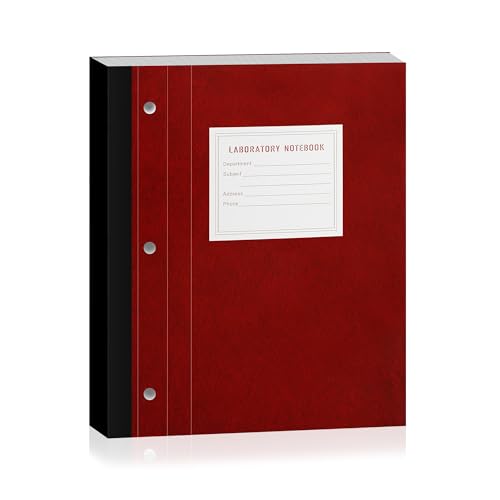
Yeplan’s laboratory notebook is a hardcover record book for science classes, research projects, and routine lab work. It measures 11 by 9.25 inches, giving users a broad writing area for observations, calculations, diagrams, and results. The pages use numbered quadrille ruling, which helps keep entries organized and supports charts or chemical formulas. It contains 100 sets of pages, with a carbon copy produced for each record.
The carbon-copy format is the main reason to choose this notebook. You can retain a permanent duplicate while submitting or sharing the original page. Perforations also let you remove individual records cleanly for reports or filing. The durable cover should handle frequent use in a classroom or lab better than a soft notebook, and the $15.99 price keeps the cost reasonable for a semester or project. Still, the notebook is a paper record system, not a digital backup or specialized spill-proof logbook.
Pros
- Carbon copies create a second record without rewriting the entry.
- Numbered quadrille pages support organized notes, measurements, and diagrams.
- Perforated sheets can be removed for reports or official filing.
Cons
- The 11-by-9.25-inch format is large for carrying in a small bag.
- The product is described as spill-resistant in use, but no waterproof rating is provided.
4. Yeplan Chemistry Lab Notebook

Best for: Students tracking lab experiments
The Yeplan Lab Notebook Chemistry is a hardcover laboratory journal with a PU leather cover and a 0.25-inch grid layout. Its numbered pages give experiments, calculations, sketches, and observations a clear place, which can make research notes easier to reference later. At $15.99, it targets students, classroom work, and routine lab documentation without the loose-page setup of a standard composition notebook.
The thick paper is designed for writing on both sides, with support for pencils and ballpoint pens. That makes the notebook useful for formulas, diagrams, data tables, and written procedures. The bound construction should handle regular handling better than a basic paper-covered notebook, while the professional design fits school or workplace settings. Still, the listing does not provide the total page count, so buyers cannot judge its overall writing capacity or value by page.
Pros
- The 0.25-inch grid supports neat calculations, charts, diagrams, and measurements.
- Numbered pages help organize experiment records and locate older notes.
- A PU leather cover and hardcover construction suit frequent academic or lab use.
Cons
- The listing does not state the number of pages, limiting comparisons with other notebooks.
- A hardcover, bound design cannot add, remove, or rearrange pages as research files change.
3. National 43649 Laboratory Notebook

Best for: Lab charts and duplicate records
The National Laboratory Notebook 43649 is a bound record book for lab notes, calculations, charts, and research records. It measures 11 by 9.25 inches, giving you a broad writing area without moving into oversized ledger territory. The stitched binding and sturdy cover are suited to regular handling in academic or laboratory settings. Made in Canada, it costs $16.24.
Its main strength is the duplicate-page format. The notebook includes 100 numbered sets, with a white original sheet and a yellow copy for each entry. That setup helps keep a working record while sending a copy to a supervisor, partner, or project file. Micro-perforations make the duplicate sheet easier to remove cleanly. The 4 x 4 quad ruling also gives charts, formulas, measurements, and graph work a consistent layout. It is more specialized than a standard lined notebook, but that structure can reduce clutter in technical records.
Pros
- 100 numbered duplicate sets support organized record-keeping.
- White and yellow sheets make copies easy to distribute.
- 4 x 4 quad ruling suits graphs, formulas, and data tables.
Cons
- Quad ruling is less comfortable for long narrative notes.
- The 11 x 9.25-inch size may be too large for small bags or crowded workspaces.
2. BARBAKAM Lab Notebook 100-Page Spiral Bound

Best for: Lab records needing duplicate copies
The BARBAKAM Lab Notebook contains 100 carbonless pages in a spiral-bound format. Each writing sheet can create a self-copy on the page beneath it, so you can keep a duplicate record without carbon paper or a separate copier. That setup fits lab notes, field observations, inventory checks, and service records where one copy stays in the notebook and another goes elsewhere.
The copy page is perforated, which lets you remove the duplicate after writing while leaving the main record in place. This is the notebook’s most useful detail. It combines the control of a bound notebook with the convenience of detachable copies. At $29.95, it costs more than a basic ruled notebook, but the carbonless system may justify the price for repeated two-copy paperwork. The listing does not provide the notebook’s dimensions or page ruling, so confirm those details before ordering if writing space matters.
Pros
- Carbonless pages create a duplicate without separate transfer paper.
- Spiral binding keeps the 100-page notebook together during routine use.
- Perforated copy pages can be removed for filing or handoff.
Cons
- At $29.95, it is expensive compared with standard lab notebooks.
- The listed details do not state the notebook size or ruling style.
1. BookFactory Lab Notebook
Best for: Organized laboratory recordkeeping and research notes
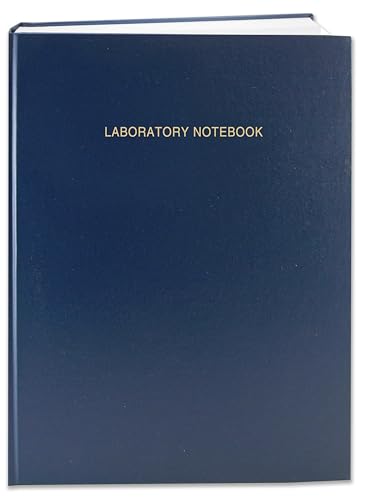
This BookFactory lab notebook uses a blue imitation-leather hard cover with “LABORATORY NOTEBOOK” stamped on the front. Its 8 7/8-by-11 1/4-inch size provides a large writing area without moving into oversized ledger territory. Inside are 96 acid-free, 60 lb archival pages, each printed with a 1/4-inch, or 6 mm, grid. The format suits measurements, diagrams, tables, and handwritten procedures.
Several details make it more useful for formal lab records. The section-sewn binding allows the book to lie flat, which can make writing and scanning pages easier. A “User Data” page, documentation guidelines, and table of contents give users a ready starting structure. The archival paper supports long-term storage, while the tamper-evident design helps protect the integrity of written entries. BookFactory produces this notebook in Ohio through a veteran-owned business. At $24.99, it costs more than a basic school graph notebook, but the construction targets repeat lab use rather than casual note-taking.
Pros
- Hardbound imitation-leather cover offers better protection than a soft notebook.
- Section-sewn binding lets pages stay open while you write or scan.
- Acid-free, 60 lb paper and the 1/4-inch grid support durable, organized records.
Cons
- The 96-page count may run short for long experiments or multi-month projects.
- At $24.99, it is a relatively expensive choice for simple graph-paper notes.
Buying Guide
The most important factor is page security, because a permanently bound notebook preserves the order of observations and makes missing pages obvious. For regulated or shared work, that record trail can matter as much as the paper itself.
- Binding and page security: Choose sewn or glued-in pages with numbered sheets, not a spiral notebook with removable paper. A 100 to 200 page book suits most projects.
- Paper and ruling: Use 90 to 100 gsm paper for wet inks, with 5 mm graph or 7 mm ruled lines for measurements. Acid-free paper helps records remain readable.
- Size and portability: An A5 notebook, about 5.8 by 8.3 inches, fits many lab coats. Choose A4, about 8.3 by 11.7 inches, for charts, labels, and lengthy entries.
- Compliance features: Look for printed page numbers, date fields, project fields, and witness or signature lines. A hardcover and table of contents also support long studies.
- Cover and price: Select polypropylene or coated cardstock for better resistance to splashes. Expect to pay $10 to $30 for one durable notebook, or $20 to $45 for a two- or three-pack.
If you cannot have everything, prioritize numbered, permanently bound pages because they protect the record’s integrity.
Frequently Asked Questions
What is the best lab notebook for science students?
The best lab notebook for science students is a bound, numbered notebook with durable paper and space for dates, procedures, results, and signatures. Choose pages around 8.5 by 11 inches if you attach charts or printouts. A sewn binding also stays open better than many glued notebooks.
How do I choose the best lab notebook for chemistry?
Choose a chemistry lab notebook with numbered pages, a table of contents, and paper that resists light splashes from common solutions. A 100 to 200 page book usually gives room for several experiments without becoming bulky. Pick a carbonless duplicate format if you need permanent copies for a partner or supervisor.
Can I use a regular notebook as a lab notebook?
Yes, you can use a regular notebook as a lab notebook if it has numbered pages and you record entries in permanent ink with dates and corrections. Add a contents page and leave no blank spaces between entries. A 200-page composition book can work for class labs, but it may lack a signature area.
Are digital lab notebooks better than paper?
Digital lab notebooks are better when searchable records, shared access, and photo attachments matter, while paper is better for simple work at a wet or crowded bench. Choose digital storage when your team needs version history and backups. A system that exports PDF files monthly gives you a readable archive if software access changes.
Conclusion
BookFactory Lab Notebook is the top recommendation for researchers, students, and professionals who need a durable, organized record for ongoing lab work. If your priority is portability or a lower upfront cost, pick a smaller spiral-bound lab notebook instead, since it is easier to carry and replace. Before buying, double-check the notebook’s size, compatibility with your filing or storage system, page quantity, and current price. Choose enough pages for the project, but avoid paying for unused paper if you keep separate records. A clear labeling system, numbered pages, and room for dates can also save time during reviews. That makes the right notebook a practical fit for your workflow, budget, and record-keeping rules.